
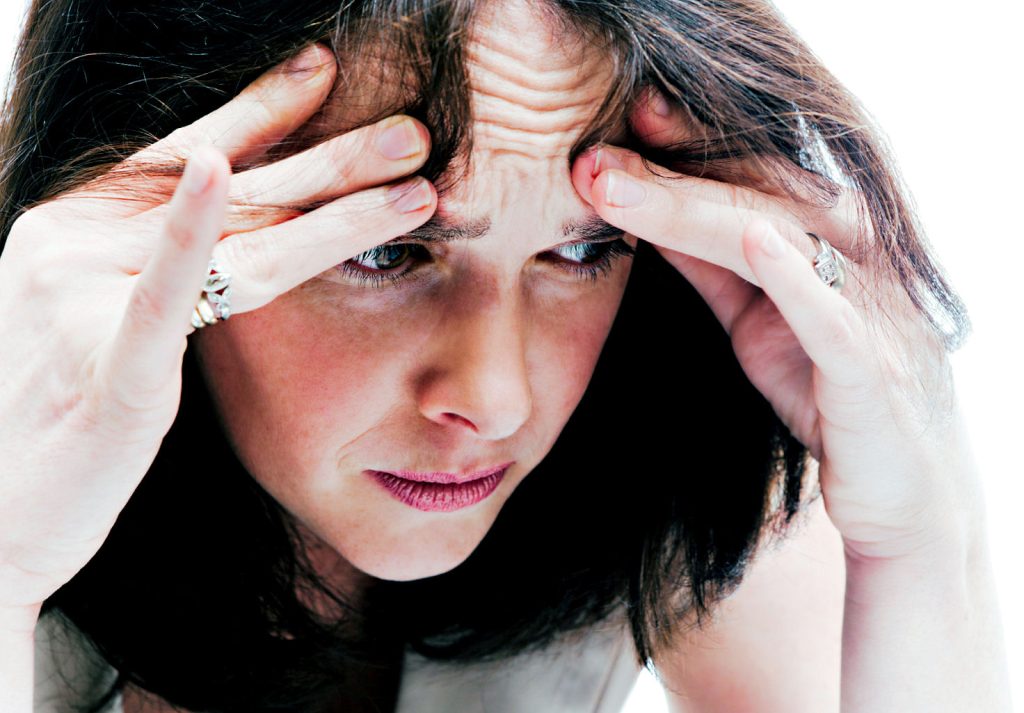
Signs and Symptoms of Anxiety
Anxiety is a psychological and physiological state that results in a feeling of restlessness/uneasiness, worry, tension, and irritability. This anxiousness can also result in some physical symptoms such as:
- Headaches
- Jaw pain or tightness
- Difficulty sleeping (insomnia)
- Muscle tension
- Dry mouth
- Fatigue
- Tightness in the chest
- Heart palpitations
- Indigestion
- Bloating
- Sweating/perspiring without physical activity
- Nausea
- Trembling
- Difficulty concentrating
Anxiety which occurs suddenly is often referred to as a panic attack, and can be characterized by the following additional symptoms:
- Hyperventilation (taking short, rapid breaths)
- Dizziness or faintness (as a result of hyperventilating)
- Difficulty swallowing
- Shaking or muscle spasms
- Numbness and tingling of the mouth, hands, fingers, or feet
- Heart palpitations
Note that since many of the symptoms of anxiety are also characterized by other medical conditions, you should consult your doctor for a proper diagnosis.
Causes of Anxiety and Panic Attacks
While the exact cause of anxiety and panic attacks is not fully understood, the following factors appear to contribute to its development:
- Genetics: if you have a family history of anxiety, there is a high chance of it being passed on.
- Stress or Trauma: the death of a loved one, divorce, difficulties at work/school, or other stressful events are known to increase the chances of developing anxiety or a panic attack.
- Addictive Substances: using or withdrawal from caffeine, nicotine, or alcohol can contribute to the development of anxiety.
Anxiety is a very common problem in North America, with over 4 million American adults being affected by it. Statistics have shown that women are affected by it more often than men.
Home Remedies for Anxiety Treatment
Prevent Anxiety with Kava Kava
The root of the Kava Kava shrub contains kavalactones, an active ingredient that is known to have a sedative effect which is great for treating anxiety and panic attacks. It is often consumed as a tea, but can also be found in capsule, tablet, and liquid extract forms.
A kava capsule of 40 to 75 mg is often recommended three times per day to treat anxiety.
Note that it is recommended that you consult your doctor before using Kava to treat anxiety, particularly if you are currently taking any prescription medications. Kavalactones can cause indigestion, headaches, and drowsiness in some individuals, so discontinue use if you experience any of these side effects. It is also important not to use Kava if you are pregnant or nursing.
Chamomile as a Home Remedy for Anxiety
Chamomile is an excellent herb for treating anxiety and insomnia. Simply drink 2 cups of Chamomile tea each day to help calm and relax your body. Note that you should avoid the use of Chamomile if you are pregnant, or if you are currently taking blood thinners.
Yoga Poses to Treat Anxiety
Yoga poses have been found to help relax tense muscles and oxygenate the body, which can calm the body and help reduce anxiety. The following Yoga pose has been found to be particularly effective:
- Lie on your back with a pillow under your knees and your arms at your sides, palms facing up.
- Close your eyes and relax your whole body.
- Slowly inhale.
- As you inhale, try to imagine that the air around you is full of energy, and your body is absorbing this energy like a sponge.
- Exhale slowly and deeply, allowing the tension to drain from your body.
- Repeat this process for 5 to 10 minutes.
By doing this pose daily, you will find that you will become more relaxed and your anxiety symptoms will begin to disappear.
Prevent Panic Attacks with Breathing Exercises
Since short, rapid breaths are one of the main symptoms of a panic attack, learning to do deep, diaphragmatic breathing can be very effective. The following five-phased approach is recommended as a systematic way to improve the way you breathe. Start with phase 1, and repeat it twice a day for 5 minutes. Once you have mastered it, move on to the next phase. In all cases, you should breathe in through your nose, and breathe out through your nose or mouth.
- Phase 1: lie on your back (on a carpeted floor or yoga mat) and place a pillow on your stomach. As you breathe in, your diaphragm should expand and the pillow should move up. When you breathe out, the pillow will move down. Focus on the movement of the pillow to assess how well you are breathing.
- Phase 2: repeat Phase 1, but this time don’t use a pillow. Instead, place one hand over your navel, look at the ceiling, and close your eyes. Now take slow, deep breaths in and out and focus on your stomach moving up and down using your hand.
- Phase 3: repeat Phase 2, but this time don’t place your hand over your stomatch. Instead, try to sense your stomach moving up and down as you breathe while your eyes remain closed.
- Phase 4: Sit on a sofa and lean back so that you can see your stomach area. Keep your eyes open and watch your stomach move up and down as you deeply breathe in and out.
- Phase 5: Repeat Phase 4, but this time sit up straight on a sofa. Breathe in and out deeply, but make sure that your upper chest and shoulders remain as still as possible.
- Phase 6: Repeat Phase 5, but perform the breathing while standing up straight (instead of sitting on a sofa).
After performing this breathing retraining, you will be better able to prevent panic attacks by knowing how to perform deep, concentrated breathing.
Walking for Anxiety Relief
Regular walking helps ease anxiety by lowering physiological arousal (heart rate, muscle tension), boosting mood-related neurotransmitters, and offering a simple, mindful routine that improves stress regulation; even brief or moderate-pace walks show measurable reductions in anxiety symptoms. A 2024 systematic review and meta-analysis concluded that various forms of walking are an evidence-based intervention for reducing anxiety (and depression) symptoms. 2
References
- ^
Karen M. Savage, corresponding author Con K. Stough, Gerard J. Byrne, Andrew Scholey, Chad Bousman, Jenifer Murphy, Patricia Macdonald, Chao Suo, Matthew Hughes, Stuart Thomas, Rolf Teschke, Chengguo Xing, and Jerome Sarris
“Kava for the treatment of generalised anxiety disorder (K-GAD): study protocol for a randomised controlled trial.” Published online 2015 Nov 2. doi: 10.1186/s13063-015-0986-5 - ^
The Effect of Walking on Depressive and Anxiety Symptoms — Systematic Review & Meta-analysis (2024)
Leave a Reply