
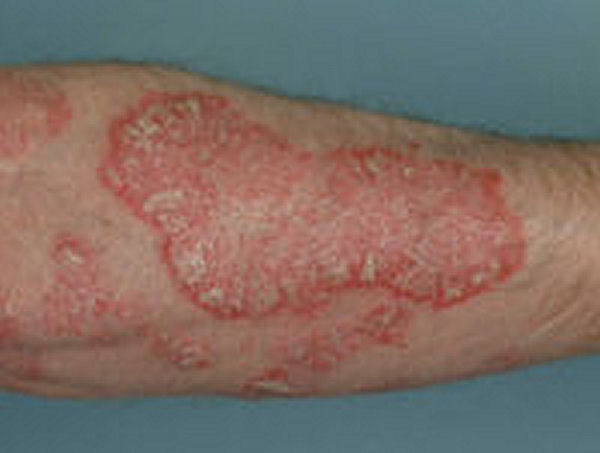
Signs and Symptoms of Psoriasis
Psoriasis is a chronic, non-contagious disease that is characterized by itchiness and a skin rash. The rash is usually red and slightly raised, with silvery, scaling patches on top of the red regions. The infection usually affects the elbows, knees, scalp, fingernails, and trunk of the body. Psoriasis can also lead to arthritis-like joint pain.
Note that it is sometimes difficult to differentiate between psoriasis and eczema, since both often exhibit similar symptoms. A common way to differentiate between the two diseases is by seeing which area of the body is affected. Psoriasis often affects the back of the elbows and front of the knees (extensor surfaces), while eczema usually affects the inside of the arms and the back of the knees (flexor surfaces). Eczema is also more often found on the ankles than psoriasis.
Causes of Psoriasis
The underlying cause of psoriasis is unknown. However, what we do know is that the symptoms of psoriasis occur when skin cells begin to mature more rapidly than normal. As a result, these poorly developed cells cannot shed quickly, resulting in a build-up of skin which leads to the thick and scaly rash.
Suspected triggers of psoriasis include:
- Family history of psoriasis.
- Stress or anxiety.
- Reaction to certain drugs.
- Certain infections such as strep throat.
- Drinking alcohol.
A few studies have also found that decreasing the consumption of fatty meats (such as pork) helps to reduce the appearance of scaly psoriasis patches. Reducing caffeine consumption was found to have a similar effect.
Home Remedies and Natural Treatments for Psoriasis
Baking Soda
Baking soda is an effective way to treat the itchiness associated with psoriasis. Simply dissolve 1/3 cup of baking soda into 1 gallon of water, and then soak a washcloth into this mixture. Wring out the cloth and then apply it directly to the affected skin. Repeat this several times.
Coconut Oil
Coconut Oil has been found to be an excellent natural treatment for relieving psoriasis. A common recommendation is to take 2 tablespoons of virgin coconut oil each day. It can either be consumed directly from the spoon, or you can mix it into a fruit smoothie, sautee vegetables with it, or use it as a replacement for butter when eating pancakes. Another option is to apply coconut oil topically onto the affected area 3 times per day.
Petroleum Jelly
One of the best ways to control the build-up of skin that occurs due to psoriasis is to make sure skin is well moisturized. Petroleum jelly is an effective moisturizer, so simply apply a small amount to the affected areas each day especially after taking a bath or a shower. It is also important to apply moisturizer within a few minutes after a bath or shower.
Sunlight
Many doctors prescribe artificial ultraviolet light treatments to patients suffering from psoriasis. A less expensive alternative is to simply get more sunlight! Start with 5-10 minutes of sun exposure, preferably during non-peak hours. Gradually increase exposure time, but avoid overexposure and use sun protection for unaffected areas.
Exposure to the sun can enhance the production of Vitamin D, which has been found to be effective at treating psoriasis.
Chamomile Tea Bath
Chamomile is believed to help reduce the inflammation associated with psoriasis, while also potentially helping to inhibit further growth of psoriasis plaque. So here’s a great natural remedy for psoriasis that is also calming and relaxing at the same time! Simply take 4 or 5 chamomile tea bags, and steep them in 4 cups of boiling water for about 15 minutes. Let the tea cool slightly, and then mix the entire tea into a bathtub full of warm water. Swish it all around so that it is spread evenly throughout the bathtub, and then take a soak in the tub for around 20 minutes.
References
-
Coconut Oil for Psoriasis –
Medically reviewed by Debra Sullivan, Ph.D., MSN, R.N., CNE, et al. - Petroleum Jelly for Psoriasis – Daniel Maroto-Morales, et al.
-
Sun exposure induces rapid immunological changes in skin and peripheral blood in patients with psoriasis
– E Søyland, et al.



Leave a Reply